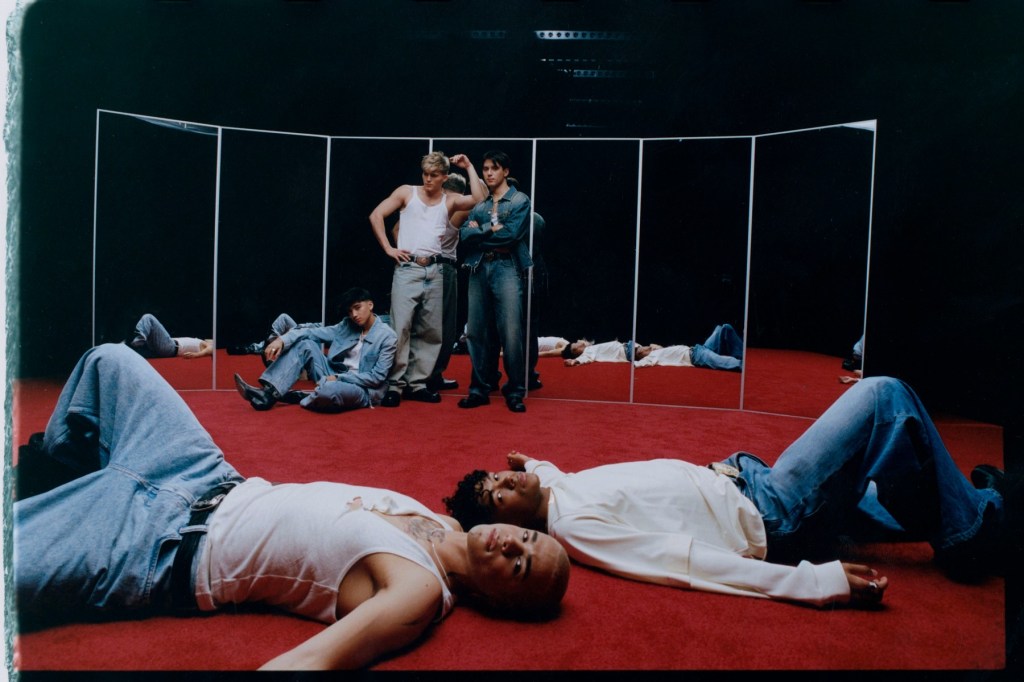

New Music Latin is a compilation of the best new Latin songs and albums recommended by Billboard Latin and Billboard Español editors. Check out this week’s picks below.
Explore

See latest videos, charts and news
Piso 21, TRESCENDER (Tres Sietes LLC/Sound of Light Entertainment)
Piso 21 present its eighth studio album — and first as a trio since the parting of former member Lorduy in January 2025 — called, Trescender. A merge of the Spanish words “transcendence” and “three,” the 12-track set spotlights the Colombian group’s timelessness, evolution and emotional maturity throughout its almost 20-year career. Trescender kicks off with the funk-rock song “Bruno Mars,” on which members Dim, Profe and Pablo highly manifest a future collaboration with the American superstar. It then continues into three consecutive notable collabs including the viral salsa hit “Volver” with Marc Anthony and Beéle.
Sonically, Piso 21 stays faithful to its signature pop sound while also experimenting with merengue on “Regalito” with Juan Duque, vallenato on “Felices de Mentira” with Fonseca and bolero on “Por Si Mañana No Estoy” with Andres Cepeda. Lyrically, the group delivers feel-good and uplifting verses, while also oozing sophistication and romanticism. Trescender also marks the trio’s debut studio album under their own record label, Tres Sietes, which they exclusively announced during an invite-only album release party in Miami on Thursday (March 12). Other collaborators in the album include Bacilos, Lasso, and Yami Safdie. — JESSICA ROIZ
Laura Pausini, YO CANTO 2 (Warner Music Italy)
Twenty years after her successful covers album Yo Canto (2006), Laura Pausini once again pays tribute to the countries that have welcomed her and the artists who have inspired her with Yo Canto 2. The 18-song set (21 on the deluxe edition) — part of a dual project that includes the previously released Italian LP Io Canto 2 — features such iconic tracks as Juan Luis Guerra’s “Bachata Rosa,” Ricky Martin’s “Livin’ La Vida Loca,” Gloria Estefan’s “Oye Mi Canto” and Shakira’s “Antología.”
Pausini sings from a more mature perspective, showcasing new colors and nuances: her rockier side in Fito Páez’s “Mariposa Tecknicolor;” her more sublime side in Violeta Parra’s anthem “Gracias a la Vida;” or Bad Bunny’s heart-wrenching ballad “Turista.” It also features a few multigenerational collaborations, from veteran Ricardo Montaner on his own “Cuando Nacen Amores” to a young Yami Safdie on Joan Sebastian’s “Eso y Más.” With an impeccable production and her ever-confident, precise voice, Pausini makes these songs her own, creating a tribute worthy of pride for their authors. — SIGAL RATNER-ARIAS
Luis R Conriquez, “Muchacho Alegre” (K Music)
Luis R Conriquez’s latest single, “Muchacho Alegre,” is a defiant celebration of his journey — from humble beginnings in Caborca, Sonora, to a life of success and indulgence. With steely guitars, sharp brass and unapologetic swagger, he recounts the grind that took him from nothing to overflowing riches, a life filled with music, luxury and the company he keeps. “Que el muchacho alegre lo bueno que ha coronado/ Vengo desde abajo, pero también la perreé,” he belts (“Let the cheerful boy celebrate the good things he’s achieved / I came from humble beginnings, but I’ve worked my way up”). The music video captures this arc, contrasting scenes of Conriquez on a sprawling Mexican ranch with moments in Paris, in front of the Eiffel Tower and high-end boutiques, reflecting a man who honors his roots while reveling in how far he’s come. — ISABELA RAYGOZA
Bunbury, “La próxima vez no habrá próxima vez” (Warner Music Spain)
One of the most influential artists in Latin music, Enrique Bunbury, unveils “La próxima vez no habrá próxima vez,” the fourth single from his upcoming album, De un siglo anterior. The title, which translates to “Next time there will be no next time,” captures the finality and emotional intensity at the heart of the track: once a boundary is crossed, there is no possibility of return. Bunbury’s unmistakable voice weaves through a tapestry of blues, country, and rock, anchored by a nostalgic guitar that evokes both longing and resolve. The instrumentation is rich and textured, while Bunbury’s delivery imbues the song with wisdom and raw vulnerability. — INGRID FAJARDO
Banda Carnaval, No Tiene Precio (FONO/Andaluz Records)
Banda Carnaval brings together all the styles they master with their traditional Sinaloan sound in one album. The ever-present tuba, trumpets, clarinets, snare drums and, of course, the tambora drum adorn each of the 10 songs produced by Jesús Tirado. The focus track “Si Se Trata de Ti”— the most romantic of the set — contrasts “De Nuestro Amor No Queda Nada,” which announces the end of a deteriorating relationship, much like “El Que Se Lleva Se Aguanta,” another song of heartbreak. A corrido couldn’t be missing and it arrives in “El Lucero,” about a magnificent horse and its ranch life, while the simple life and love of a close-knit family can be heard in the title track. “Cumbia Carnaval” is perfect for dancing, and “Por Aquí Pasó María” adds a fun, cheerful touch, giving the production a balanced feel. — TERE AGUILERA
Dale Pututi, Nesty, Romn Beatz, “Maridón” (Plus Media/Rami Records)
Dale Pututi and Nesty have been enjoying an unstoppable streak since the launch of their first collaborative effort “Luna” in 2025. The Miami-based Cuban artists — not to be confused for a duo because they each lead their own solo careers — have now teamed up for “Maridón.” Produced by RoMn Beatz, the nearly three-minute song is an innovative melting pot of rhythms that includes reparto and ranchera music. A Cuban slang that can loosely be translated to “dumb boyfriend,” the lyrics are about a man who’s secretly hooking up with a girl that’s in a relationship.
“Tell your partner to stop looking on social media/ He’s on top of my profile, and he needs to learn some manners/ It looks like he hasn’t realized what a total fool he’s making of himself/ I don’t even follow you, yet we’re still hooking up,” says the cheeky chorus. “Maridón” is a subtle sequel to Pututi and Nesty’s “Los Despechaos” in collaboration with Tito El Bambino, on which all three acts sing from the point of view of a man who’s spiteful after a breakup — and in a turn of events, he’s now the other man. — J.R.
Enjambre, Daños Luz (Enjambre/Believe LATAM)
The new album by the Mexican rock band Enjambre is — in the words of their lead singer, Luis Humberto Navejas — “a tunnel of eras” that connects the group members’ adolescence in their native Zacatecas, in northern Mexico, with their musical present. Consequently, the 11-track album unfolds as a journey through time, where emotions and memories surface, prompting reflection on what has been lost and gained over the years — always buoyed by a hopeful ray of light. The LP features nostalgic songs such as “Desfaces,” “El regalo,” “Vida en el espectro,” and “Mente adolescente”—the latter a punk-rock track inspired by Argentine bands like Dos Minutos.
In these tracks, they weave together stories and memories of youth, alongside experimentation with diverse sounds, mesmerizing electric guitars, and even a nod to the nights spent at dance halls. Pieces like “Angustias” explore the weight of thoughts and emotions, while others, such as “Errante,” address themes like identity. Enjambre’s new release reflects both emotional and musical maturity, reaffirming the sonic quality that earned them a spot on Billboard’s 50 Best Latin Rock Bands of All Time list. — NATALIA CANO
SANTOS BRAVOS, DUAL (HYBE Latin America)
During a Billboard livestream at 2026 Premio Lo Nuestro last month, SANTOS BRAVOS revealed an upcoming surprise with the number six — and now, the group has unleashed its debut EP DUAL, consisting of six tracks. Home to debut single “0%” and the previously-released “KAWASAKI,” the set finds group members Drew (US), Kauê (Brazil), Alejandro (Peru), Kenneth (Mexico), and Gabi (Puerto Rico) exploring edgy and progressive rhythms while singing in different languages. DUAL perfectly showcases the group’s two-sided identity: Santo rooted in the energetic, melodic, and emotional Latin pop sound, and Bravo, representing intensity and instinct backed by reggaetón and global club sounds. The release of the EP is accompanied by a new docuseries, detrás de DUAL (Behind DUAL), premiering March 15 on Spotify. — J.R.
Los Dos Carnales, “Me Derrito” (Afinarte Music)
It had been a while since Los Dos Carnales released a romantic song, and “Me Derrito” is even sensual — as it tells the story of winning a woman’s heart, what she evokes and what might happen if she lets herself be swept off her feet. Written by Blas Murrieta, one of the most sought-after songwriters of corridos tumbados, it showcases another facet of the composer and, at the same time, allows brothers Imanol and Poncho Quezada to display their interpretive skills outside of the gritty, self-improvement songs that generally make up their repertoire. Musically, Los Dos Carnales’ distinctive traditional norteño style, in which the accordion takes center stage, remains intact, with the old-school sound of the bajo sexto, drums, double bass and snare drums equally preserved. — T.A.
Check out more Latin recommendations this week below: