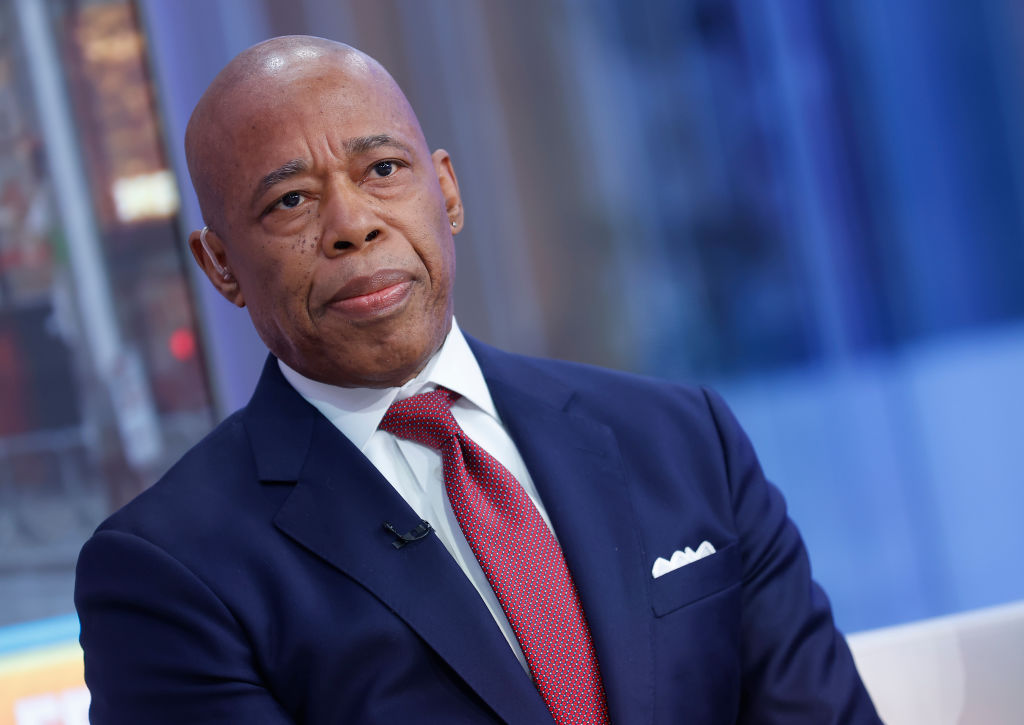
The Department of Justice (DOJ) has formally requested the dismissal of corruption charges against New York City Mayor Eric Adams. The decision has sparked outrage, with seven federal prosecutors resigning in protest after Acting Deputy U.S. Attorney General Emil Bove ordered the case to be dropped. The charges, which included allegations of over $100,000 in illegal campaign contributions and travel benefits from foreign nationals, had cast a shadow over Adams’ tenure as mayor.
RELATED STORIES: Whew! Federal Authorities Conduct Raid at Eric Adams’ Mayoral Residence
DOJ Moves to Dismiss Corruption Charges Against Eric Adams
Federal Prosecutors Resign Over DOJ Decision
The DOJ’s request to drop corruption charges against Eric Adams has caused an internal rift within the department. According to Newsweek, several federal prosecutors chose to resign rather than comply with Bove’s directive. Bove defended his controversial decision by stating that Adams was an essential figure in President Donald Trump’s immigrant enforcement strategy. However, critics argue that the move suggests political motivations rather than legal justification.
Legal experts have noted that dismissing charges “without prejudice” leaves room for the case to be revived after the mayoral election, raising questions about timing and potential political maneuvering.
The Allegations Against Eric Adams
Federal prosecutors had accused Adams of:
- Accepting over $100,000 in illegal campaign donations.
- Receiving undisclosed travel benefits from foreign nationals.
- Violating campaign finance laws during his mayoral campaign.
These allegations placed Adams at the center of a corruption probe, leading many to question how deeply these financial ties influenced his political career.
The Secret Washington Meeting That Changed Everything
Reports have surfaced that the decision to drop the case followed a private meeting between Adams’ legal team and DOJ officials in Washington. During this meeting, Adams’ lawyers allegedly offered a quid pro quo deal related to immigration enforcement, which ultimately led to Bove’s decision to pull the case.
This revelation has further fueled speculation of a backroom deal, suggesting that Adams’ cooperation on immigration policies may have played a critical role in the DOJ’s reversal.
Despite the legal controversy, Adams remains politically active and publicly denies any wrongdoing. His supporters claim the charges were politically driven from the start, while opponents believe the case should have gone to trial to ensure transparency. If the case is revived post-election, Adams could face renewed legal scrutiny, further complicating his political career.